

 The UK's Information Commissioner's Office (ICO) has confirmed it is formally investigating Oxehealth, the company behind a camera-based monitoring system installed in the bedrooms of NHS mental health patients. The regulator said it could not comment further while the case remains open.
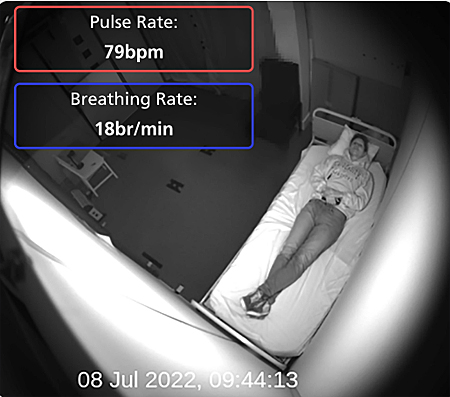
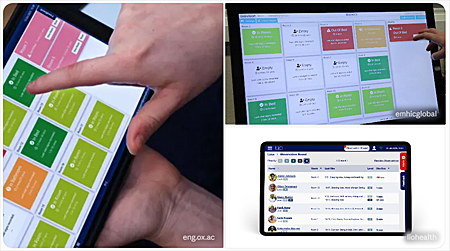
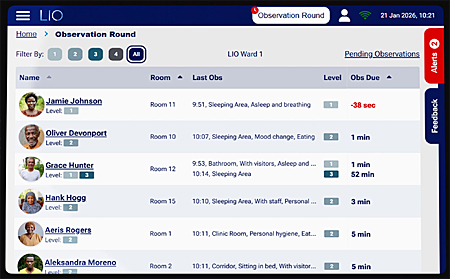
The technology in question, Oxevision, uses an infrared camera to film patients around the clock and is currently deployed across roughly 40% of NHS mental health trusts' inpatient services, including some children's wards. Rather than constant human observation, the system sends alerts to staff when it detects signs of distress or unusual activity.
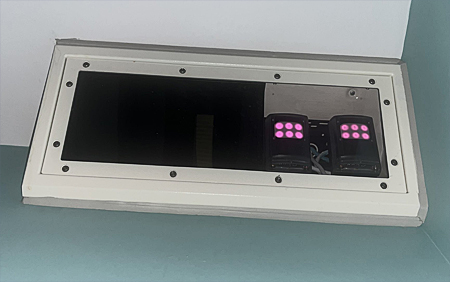 The inquiry was triggered by a formal complaint from the campaign group Stop Oxevision, whose lawyers argued that NHS trusts had not established a clear lawful basis for how patients' data is being collected, processed and retained. The company, which has since rebranded from Oxehealth to LIO Health, says it is cooperating with the regulator.
The financial case for the technology
Supporters of the system point to significant cost savings as a key justification for its rollout. An independent economic evaluation by the York Health Economics Consortium found that for every £1 invested in Oxevision, trusts could expect a return of £6.94 in older adult wards, £2.70 in acute wards and £3.70 in psychiatric intensive care units.
These savings come mainly from reducing one-to-one observations, some of which cuts spending on agency and bank staff, alongside efficiency gains from fewer incidents and faster night-time checks.
 A review by the NIHR Mental Health Policy Research Unit similarly concluded that the main driver of savings was around 36 hours of staff time saved per patient per year, largely from a reduction in one-to-one observation hours. However, campaigners argue these projected savings haven't always materialised in practice, and question whether cost efficiency should come at the expense oftherapeutic, face-to-face care.
Wider concerns about big tech's role in the NHS
The controversy over Oxevision has fed into a broader debate about the presence of large technology companies in NHS data systems. Commentators covering the story have noted overlapping concerns about the close involvement of big tech firms such as Palantir in the NHS, alongside worries that patient data could be processed for commercial profit.
It's worth noting Palantir has no direct role in Oxevision itself — the concern raised by critics is more about precedent.
 Palantir separately holds a multi-million-pound contract to build a so-called "federated data platform" for the NHS, and campaign groups have pointed to this as part of a pattern of sensitive health data being placed in the hands of for-profit companies.
That platform has attracted its own scrutiny: NHS England reportedly changed policy to allow some Palantir staffto access identifiable patient data through a new "admin" role, a move a briefing document warned could risk public confidence in data safeguards.
Documentation for the platform indicates it is ingesting data covering areas including mental healthcare contact activity and aggregated data on people held in secure mental health facilities.
Groups like NSUN have cited the Palantir contract as a cautionary example when calling for scrutiny of Oxevision, arguing that the risks associated with for-profit companies handling NHS data extend well beyond any single vendor.
Mounting scrutiny elsewhere
Oxevision has faced growing challenges beyond the financial and data-governance debate. A Parliamentary and Health Service Ombudsman ruling partly upheld a complaint from a patient at an Essex trust, and the technology is also being examined by the Lampard public inquiry into deaths in mental health services. A senior figure at LIO Health told that inquiry that filming a patient continuously could amount to a serious invasion of privacy.
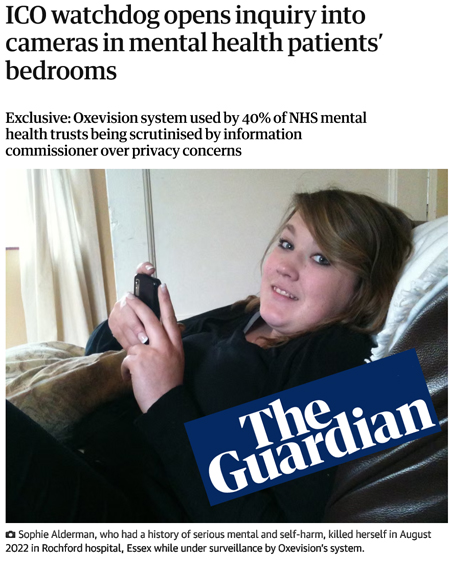
 Evidence given to the inquiry has included the case of Sophie Alderman, a 27-year-old with a history of serious mental illness who died by suicide in 2022 at a hospital in Essex while under Oxevision monitoring; her mother told the inquiry the system worsened her daughter's paranoia instead of reassuring her, and did not prevent her death. Staff at the same trust have also acknowledged the system could potentially have been misused — by repeatedly refreshing the camera's 15-second feed to gain extra views of patients' rooms.
Not every trust has been convinced by the cost case. A pilot in Leicestershire was scrapped after only 42% of patients consented to being monitored during its second trial, and staff found no reduction in one-to-one observations, no time savings, and no measurable drop in incidents or length of stay. Campaigners maintain that projected budget benefits shouldn't outweigh patients' right to privacy in what is meant to be a personal space.
Where the ICO investigation stands
 As of now, the ICO has not published any findings or conclusion, and the regulator has given no indicated timeframe for when the inquiry might close. Investigations of this scale — spanning governance arrangements across dozens of NHS trusts and involving special category health data — typically take many months.
In the meantime, LIO Health has continued to defend the technology. The company has pointed to clinical data presented to the Lampard inquiry showing the system identified 436 instances of self-harm and 935 ligature occurrences on wards run by Essex Partnership University NHS Trust alone, arguing this allowed staff to intervene, and rejecting what it called a dangerous narrative equating bedroom privacy with patient safety. The trust's own representatives told the inquiry Oxevision had helped enable more timely interventions and, in their view, helped preserve life.
The Lampard inquiry continues to hear evidence on Oxevision's use in Essex wards, and its findings — expected well before any ICO ruling — may prove the more immediate source of scrutiny for the technology. Campaigners maintain that neither cost savings nor clinical justifications should outweigh patients' right to privacy in what is meant to be a personal space.
Sources: Novo / The Guardian / ICO. images: UK Reloaded / combined NHS / eng.ox.ac / emhicglobal / liohealth /
